
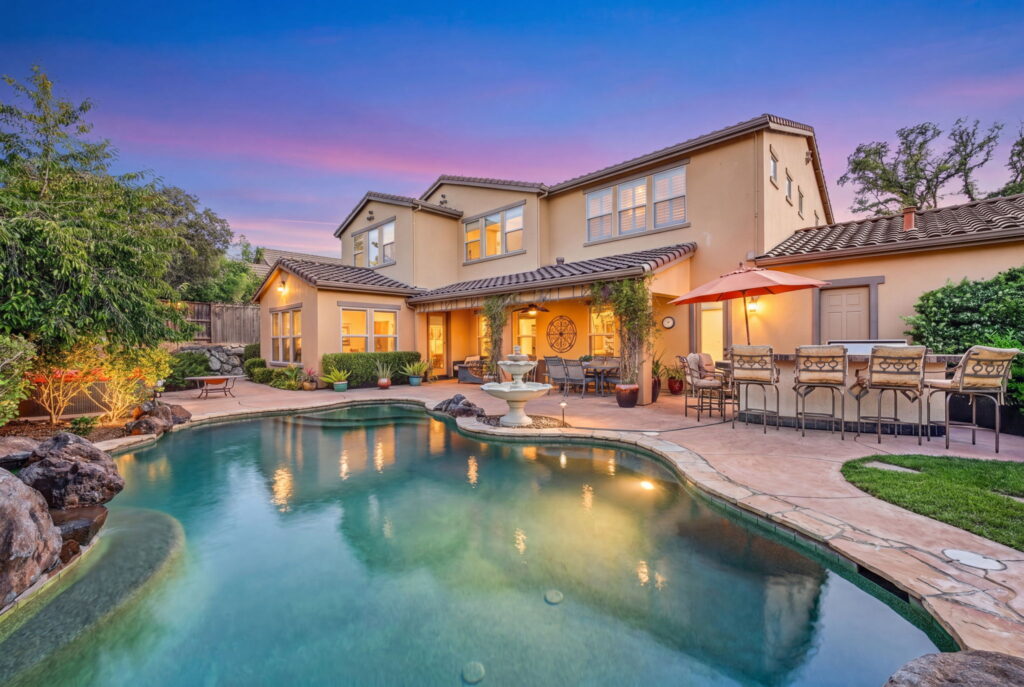
A Buyer’s Checklist for Pool Records, Safety Features, Equipment, and Next Steps
An El Dorado Hills home with a pool needs careful due diligence. Do more than glance at the water or equipment pad. Before removing applicable contingencies, confirm what is known about the pool or spa. Then decide whether a qualified specialist should evaluate the system.
Pool age, equipment, heating, fencing, drainage, permit history, and past work can differ widely by property. The goal is not to assume a defect. It is to collect useful information before making a transaction decision.
Confirm what is included with the home
Start by identifying the pool, spa, and equipment that serve the property. A listing may mention a heater, cover, waterfall, solar heating, controls, or a safety fence. Confirm what remains with the home and what can be verified.
|
Question to clarify
|
Why it matters
|
Useful next step
|
|
Is there a pool, spa, or both?
|
Each feature can have separate equipment, records, and maintenance history.
|
Ask for available records and discuss the relevant components with an appropriate professional.
|
|
Which equipment stays with the home?
|
Pumps, heaters, filters, covers, and controls may affect the inspection scope.
|
Review the purchase agreement and confirm included equipment in writing.
|
|
Is any equipment under a lease, loan, or service agreement?
|
The agreement may create transfer, termination, or access questions.
|
Request the current agreement and obtain transaction-specific guidance.
|
|
What is the access and layout?
|
Gates, barriers, easements, drainage, and landscaping can affect use and maintenance.
|
Review the site with qualified professionals and property documents when needed.
|
Collect pool records and permit history
Records can help a buyer understand the pool’s history. They do not prove its current condition. Missing records also do not prove that there is a problem.
Records to request
Ask for records that are available through the transaction. Helpful materials may include permits, final approvals, plans, invoices, warranties, manuals, and service records. Resurfacing reports, leak reports, and safety-feature records may also be useful.
Ask about any pool remodel, heater replacement, electrical work, or new safety feature. Request available records for that work. Keep the focus on verified documents rather than assumptions.
County permit history
El Dorado County’s 

These tools are useful when a transaction raises a permit-history question. They do not prove a pool’s current condition or compliance. Ask the appropriate County office and qualified professionals about questions tied to the specific property.
For a broader way to organize permits, plans, service records, and known-condition information, see 
Know what permit files can and cannot answer
County permit material can provide helpful context. It is not a universal resale checklist. A buyer should separate a record of past work from a current evaluation of the property.
What the County plan material covers
El Dorado County’s
An old plan can help explain past work. That plan may show the relationship between a pool, structures, easements, or other site features. However, it does not establish current condition. Nor does it establish that later changes were permitted or approved.
What California pool-safety law covers
California Health and Safety Code section 115922 applies to certain permitted pool or spa construction and remodeling at private single-family homes. For covered work, the statute requires at least two listed drowning-prevention safety features. It also requires a local final inspection before final approval.
The law does not create a uniform condition certificate for every pool resale. Confirm property-specific safety, permit, and transaction questions with qualified professionals and the relevant local authority.
Plan the right pool or spa inspection
A general home inspection can provide useful observations. Its scope may differ from a specialist pool evaluation. Discuss the property with qualified inspectors early enough to meet the contract timeline.
Questions for a pool specialist
The inspection scope should fit the property and the buyer’s concerns. Ask whether visible components can be evaluated. Those components may include the pool shell, coping, decking, tile, drains, lights, skimmers, plumbing connections, and equipment.
Also ask about service history. A specialist can help identify whether the pump, filter, heater, controls, electrical components, cover, or water features need further review. The buyer may also need a separate opinion from an electrician, contractor, engineer, or another qualified professional.
Consider future plans as well. A remodel, outdoor kitchen, landscape change, or solar-heating project may raise new questions. Those questions can involve access, drainage, utilities, barriers, permits, or feasibility.
Do not treat clear water, a visible pump, or an old permit as proof that every component is in suitable condition. Use property-specific observations and records instead.
Review barriers, gates, and pool access
Pool safety matters apart from cosmetic condition. Identify what is visibly present. Note anything that is unclear or inaccessible. Then ask the appropriate professional for property-specific guidance.
California’s pool-safety law lists potential safety features for covered permitted work. Examples include qualifying enclosures, removable mesh fencing, safety covers, certain exit alarms, qualifying door devices, and qualifying pool alarms. The exact statute and property facts control. Do not make a legal determination from a quick walkthrough.
Pay close attention to gates, latches, fencing, barriers, doors, windows, covers, and damaged equipment. Include the spa or removable barrier in the inspection discussion when relevant.
Use the results before removing contingencies
Due diligence helps replace assumptions with usable information. Review the records, property observations, inspection findings, and contract terms together. This creates a clearer basis for the buyer’s decision.
|
Decision area
|
Question to answer
|
Avoid this assumption
|
|
Permit history
|
What County records or seller documents are available for the pool or later work?
|
“No online record means the pool is automatically unpermitted.”
|
|
Equipment
|
What is included, accessible, and functioning at the time of evaluation?
|
“Clear water proves the equipment is problem-free.”
|
|
Safety
|
Which visible barriers, gates, covers, alarms, or access conditions need specialist review?
|
“One visible fence answers every safety question.”
|
|
Condition
|
What does the appropriate evaluator observe about the actual pool and its components?
|
“A general home inspection necessarily covers every pool component.”
|
|
Future plans
|
Could a remodel, addition, new equipment, or landscape project create new questions?
|
“Current use confirms future-project feasibility.”
|
|
Contract and financing
|
What deadlines, lender requirements, insurance questions, and negotiated options apply?
|
“A pool issue guarantees a repair, price change, or contract outcome.”
|
Chris Wolfe can help organize the transaction questions and coordinate the real-estate process. Pool-system, safety, construction, electrical, permitting, legal, lending, insurance, title, and tax questions should go to the appropriate qualified professional.
Ask El Dorado County when a record needs clarification
Contact the appropriate County office when a permit history, plan, final approval, remodel, or parcel record needs clarification. Keep the request specific. Identify the property, the record or work in question, and the decision the information will help you make.
The County plan material also shows that pool work can involve more than the pool itself. Site layout, gas, equipment, barriers, safety glazing, easements, grading, and nearby structures may matter. Do not assume a pool can be altered, expanded, or relocated without additional review.
Frequently asked questions
Does every El Dorado Hills pool need a new County inspection before a home sale?
Do not assume one County inspection process applies to every resale. County pool-plan material addresses proposed work. A cited California statute addresses certain permitted construction or remodeling. The right buyer evaluation depends on the property, contract, records, intended use, and qualified professional guidance.
What pool documents are most useful before removing contingencies?
Start with available permits, final approvals, plans, equipment information, invoices, service records, warranties, resurfacing records, leak reports, and safety-feature information. Treat missing records as an information gap to investigate. Do not treat them as automatic proof of a defect or a reason to proceed.
Does a pool permit prove the pool is in good condition today?
No. A permit record can identify prior work and the County process. It does not guarantee current condition, operation, safety, or future cost. Use records with an appropriate property-specific evaluation.
Should a buyer use a pool specialist in addition to a home inspector?
That can be appropriate when the buyer needs information beyond the general inspection scope. A pool specialist may address equipment, surface, plumbing, electrical, safety, access, or service-history questions. Confirm each professional’s scope and the contract timeline directly.
Can a future remodel or outdoor project affect the pool decision?
Yes. Future work can raise questions about access, utilities, drainage, barriers, site layout, permits, and feasibility. Discuss the intended project with the appropriate County office and qualified professionals. Do not treat the existing pool as proof that a future change will be approved.
Sources and helpful local resources
•
•
•

Chris Wolfe Chris Wolfe Real Estate Group | eXp Realty (559) 289-8218 DRE #01894853 4364 Town Center Blvd, Suite 114, El Dorado Hills, CA 95762 YouTube & Instagram: @chriswolfe_realestate