
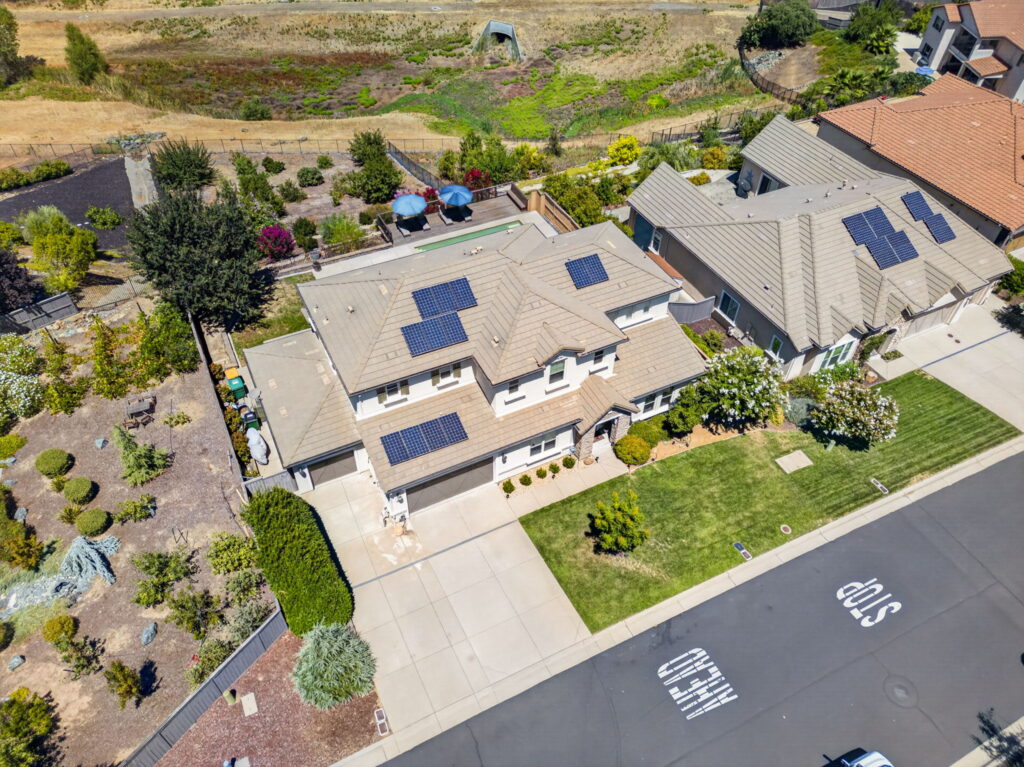
Selling a Home With Solar Panels in El Dorado Hills: What Sellers Need to Know in 2026
If you’re selling a home with solar panels in El Dorado Hills, the most important question to answer before you list is simple: Is the solar system owned outright, financed, leased, or under a power purchase agreement?
That distinction can affect how the system is marketed, what documentation a buyer will request, whether another company must approve a transfer, and what needs to happen before closing.
For an owned system, the process may be relatively simple. A solar loan, lease, or power purchase agreement can require considerably more preparation.
This matters throughout El Dorado Hills, including luxury properties and homes in communities such as Serrano, where buyers may be evaluating several ongoing ownership costs at once. Purchase price is only one part of the equation. Buyers may also be considering property taxes, Mello-Roos or other assessments where applicable, HOA dues, insurance, electricity usage, and solar obligations.
The goal for a seller should be to make the solar system easy for a buyer to understand before an offer is written—not halfway through escrow.
First: Determine Exactly How Your Solar Is Structured
Do not rely on simply remembering that your solar is “paid for” or that you “have a solar payment.” Pull the actual agreement and identify the structure.
There are four common scenarios:
| Solar structure | What sellers should verify before listing |
|---|---|
| Owned outright | Installation date, system size, warranties, permission-to-operate documentation and production history |
| Solar loan | Current payoff balance, security interests or filing requirements, and the lender’s sale/payoff procedure |
| Solar lease | Remaining term, monthly payment, escalator if any, transfer requirements and available buyout terms |
| Power Purchase Agreement (PPA) | Current energy rate, annual escalator if applicable, remaining term, transfer requirements and buyout options |
California’s Public Utilities Commission specifically advises homeowners to understand what their solar financing agreement requires if they sell their home. For leases and PPAs, that may mean transferring the agreement to the new owner or paying the remaining contractual obligation, depending on the specific contract.
That makes reviewing the paperwork early one of the most important steps in preparing a solar-equipped El Dorado Hills home for sale.
Owned Solar Is Different From a Solar Loan
One of the easiest solar details to misunderstand in a real estate listing is the word “owned.”
A homeowner may technically own the solar equipment while still having an outstanding loan used to purchase it. That is not the same transaction scenario as a system that is owned free and clear.
If there is a solar loan, the seller should contact the lender before listing and request:
- Current payoff information
- Instructions for selling the property
- Information about any UCC filing or other security interest
- Estimated processing time for payoff or release
- Confirmation of whether the loan can be transferred, if applicable
The specific requirements depend on the financing agreement.
For sellers, discovering these requirements before marketing the property gives the listing team and escrow more time to address them. Waiting until the buyer or title company discovers an issue can create unnecessary pressure near closing.
Selling an El Dorado Hills Home With Leased Solar
Leased solar requires a different conversation because the homeowner generally does not own the equipment.
Under a solar lease, the solar provider owns the system and the homeowner makes payments according to the contract. The California Contractors State License Board notes that when a leased-solar home is sold, the agreement may require the homeowner to buy out the lease or the purchaser to agree to assume it.
A seller should therefore obtain the solar company’s current transfer package before putting the property on the market.
Ask the provider:
- Can the agreement be transferred to a buyer?
- Does the buyer have to qualify for the transfer?
- What documents will the buyer need to submit?
- What is the seller’s current buyout option, if one exists?
- How long does the transfer process normally take?
- Are there transfer, processing, or administrative fees?
Do not assume that the procedure described when the system was originally installed remains unchanged. Request the provider’s current instructions in writing.
What About a Solar PPA?
A power purchase agreement, or PPA, is similar to a lease in one important respect: a third party generally owns the solar equipment.
Instead of paying a fixed amount to rent the system, the homeowner typically purchases the electricity generated by the system at a contractual rate.
For a buyer, the important details may include:
- Current price per kilowatt-hour
- Any contractual rate escalator
- Remaining agreement term
- Historical production
- Transfer requirements
- Buyout provisions, if available
California’s solar consumer guidance specifically cautions homeowners to understand escalator clauses and what happens to a PPA when the home is sold.
For a seller, the best approach is transparency. A buyer evaluating a PPA should receive enough information to understand the obligation rather than encountering the contract late in the transaction.
California’s Solar Billing Rules Matter, Too
Solar ownership and solar utility billing are related, but they are not the same thing.
California changed the rules for newly interconnected residential solar systems beginning in April 2023. The California Public Utilities Commission says customers applying for interconnection since April 15, 2023 generally take service under the newer Net Billing Tariff, which utilities may call the Solar Billing Plan.
Under the newer structure, electricity produced and used at the home can offset electricity that otherwise would have been purchased from the utility. Excess electricity exported to the grid is credited differently from the earlier NEM 2.0 structure.
Older qualifying systems may remain under earlier net-energy-metering rules for their applicable transition period. PG&E’s NEM 2 tariff, for example, provides a 20-year transition period measured from the generating facility’s original permission-to-operate date.
For an El Dorado Hills seller, that means the original interconnection and permission-to-operate documents can be valuable due-diligence records.
Rather than advertising a solar system with broad claims such as “no electric bill” or guaranteed savings, sellers should provide the actual documentation and historical production information and allow buyers to evaluate the system based on their own expected energy usage and applicable utility rate structure.
What Documents Should You Gather Before Listing?
For a solar-equipped El Dorado Hills property, a clean solar file can make due diligence significantly easier.
Before photography and marketing begin, try to assemble:
- Original purchase, loan, lease or PPA agreement
- Solar provider and financing company contact information
- Permission-to-operate or interconnection documentation
- System size and equipment information
- Installation date
- Panel and inverter warranties
- Battery information and warranty, if applicable
- Recent solar production reports
- Recent utility statements when appropriate
- Current loan payoff, lease transfer or PPA transfer instructions
- Documentation for significant repairs or equipment replacements
For a luxury home with a larger solar array, battery storage, generator, pool equipment, EV charging or other major electrical loads, production history can be particularly useful because the home’s energy profile may be very different from that of a smaller property.
How Should Solar Be Marketed When Selling?
The strongest solar marketing is specific and verifiable.
“Solar included” tells a buyer very little.
Depending on the property, useful factual details could include:
Owned solar | XX kW system | installed in XXXX | battery storage | production history available
The exact wording should match the seller’s documentation.
If the system is leased or subject to a PPA, the listing and transaction documents should accurately reflect that structure rather than presenting it as owned solar.
This is particularly important in the El Dorado Hills luxury market. Buyers comparing two homes may be looking beyond the headline purchase price and examining the complete cost and infrastructure of each property.
Solar can be part of that comparison, but only when buyers understand what they are actually acquiring.
Does Solar Increase the Value of an El Dorado Hills Home?
Potentially—but sellers should not assume a fixed dollar premium.
The market reaction to solar can depend on the system’s ownership structure, age, size, condition, production, utility arrangement and how well it matches the home’s electricity consumption.
It can also depend on the property itself.
For example, a large El Dorado Hills estate with a pool, multiple HVAC systems, EV charging and extensive outdoor equipment may have a very different energy profile from a smaller single-story home.
That is why I would not recommend simply adding the original installation cost to your expected home value.
A more defensible pricing strategy compares the property against relevant recent sales and then considers how buyers are likely to evaluate the solar system within the overall package.
For more information about the broader local market, see the 2026 El Dorado Hills buying and selling guide.
Solar Matters Even More When Buyers Are Comparing Total Ownership Costs
In Serrano and other planned communities, solar should not be analyzed in isolation.
A buyer may simultaneously be comparing:
- Purchase price
- Property taxes
- Applicable special assessments
- HOA dues
- Homeowners insurance
- Solar payments
- Electricity costs
- Pool and landscape expenses
- Expected maintenance
This is why two similarly priced homes can have noticeably different ongoing ownership costs.
For Serrano specifically, buyers who want to understand the interaction between community costs and their overall housing budget can also review the Serrano HOA and Mello-Roos guide and the broader El Dorado Hills Mello-Roos buyer’s guide.
The exact assessments, HOA obligations and solar terms should always be verified for the individual property.
A Pre-Listing Solar Checklist for El Dorado Hills Sellers
Before your home goes on the market:
- Confirm whether the system is owned outright, financed, leased or under a PPA.
- Locate the original solar contract.
- Obtain a current loan payoff or transfer/buyout information when applicable.
- Download recent production history.
- Locate the original permission-to-operate or interconnection documentation.
- Gather warranties for panels, inverters and batteries.
- Confirm whether any solar equipment has been replaced.
- Make sure your listing accurately describes the ownership structure.
- Give relevant solar documents to your real estate and escrow professionals early.
- Avoid promising a buyer a specific future electricity bill or savings amount.
For sellers, the objective is simple: remove uncertainty before it becomes a negotiation issue.
FAQ: Selling a Home With Solar in El Dorado Hills
Can I sell my El Dorado Hills home if I still owe money on the solar panels?
Yes, but the process depends on your financing agreement. Contact the solar lender before listing to determine the payoff, transfer and release requirements that apply to your system. Your escrow and title professionals can then address the property-specific requirements during the transaction.
Does a buyer have to take over my solar lease?
Not necessarily. The available options are controlled by your solar contract. Depending on the agreement, the lease may be transferable, there may be a buyout option, or other contractual requirements may apply. Obtain the provider’s current transfer instructions before accepting an offer.
What is the difference between leased solar and a PPA?
With a lease, the homeowner generally makes scheduled payments for use of a solar system owned by another company. Under a PPA, the provider generally owns the equipment and the homeowner purchases the electricity it generates according to the agreement. Both can contain long contract terms and provisions affecting a home sale.
Should I pay off my solar before listing my home?
Not automatically. First obtain the actual payoff amount and review the contract. Whether paying off a solar obligation makes sense depends on the agreement, your sale strategy and the economics of the specific transaction. A real estate professional can help evaluate how the obligation may affect marketing, while financial or legal questions should be reviewed with the appropriate qualified professional.
Should I provide buyers with my solar production history?
When available, production records can help buyers understand how the system has actually performed. They are more useful than making generalized claims about future savings because the next owner’s electricity usage may differ substantially from yours.
How early should I deal with solar paperwork before selling?
Ideally, before the property is listed. Solar documentation can affect marketing, buyer due diligence and escrow. Identifying transfer or payoff requirements early gives everyone more time to resolve questions without putting the closing timeline under unnecessary pressure.
Planning to Sell an El Dorado Hills Home With Solar?
Solar should be treated like any other significant component of a property: understand it, document it and present it accurately.
For an owned system, that may mean highlighting the equipment, production history and supporting records. For a loan, lease or PPA, it means understanding the contractual requirements before a buyer enters the picture.
That preparation is especially important when selling higher-value homes in El Dorado Hills and Serrano, where buyers are often comparing multiple property-specific expenses and features before deciding what a home is worth to them.
Chris Wolfe and the Chris Wolfe Real Estate Group can review your property, comparable sales, solar structure and other ownership considerations to build a pricing and marketing strategy around the specific home you are selling.
Sources and Helpful Local Resources
- California Public Utilities Commission — California Solar Consumer Protection Guide — Guidance on solar purchases, loans, leases, PPAs, contract terms and selling a home with solar.
- California Public Utilities Commission — Net Energy Metering and Net Billing — Current information on California’s Net Billing Tariff and earlier net-energy-metering programs.
- California Contractors State License Board — Solar Smart — Consumer guidance regarding solar contracts, financing, leases and PPAs.
- California State Board of Equalization — Active Solar Energy System Exclusion — Official information about California’s active solar energy system new-construction property-tax exclusion.
Chris Wolfe
Chris Wolfe Real Estate Group | eXp Realty
(559) 289-8218
DRE #01894853
4364 Town Center Blvd, Suite 114, El Dorado Hills, CA 95762
YouTube & Instagram: @chriswolfe_realestate